A Canadian view of world events, and what they do to all of us.
Conflict, sanctions, energy and food security, traced from the event to the household bill. Every claim carries its label. We print every source address in full and we do not link out.
Trump Threatens a Country of 92 Million With Annihilation
On 22 September the President of the United States told the United Nations General Assembly he had a decision to make on Iran: a deal, or to annihilate the Islamic Republic and drive it “into hell with no chance of survival and no hope of future greatness or generations.”
The White House release on the speech, published the same afternoon, quotes eleven passages from it. That passage is not among them. Hours later the President said his envoys had met Iranian officials, and called it “a very good meeting.”
Trump Threatens a Country of 92 Million With Annihilation
Addressing the United Nations General Assembly on 22 September, the President of the United States said he had a decision to make on Iran: a deal, or to “annihilate the Islamic Republic” and drive it “into hell with no chance of survival and no hope of future greatness or generations.” The White House release on the speech, published the same afternoon, quotes eleven passages. That one is not among them.
Sanctions Became Law. The Lukoil Licence Moved Again.
On 18 September the President signed a bill putting sanctions on Russia into statute. The same day, the Treasury bureau that runs those sanctions replaced the licence that lets buyers negotiate for Lukoil’s refineries and filling stations outside Russia. Set the new licence beside the old one and the paragraphs match. The date is what changed.
“Laughable”: Trump Threatens Europe Over Canada’s EU Offer
Canada and the European Union have traded under an agreement since 2017. When the European Commission proposed deepening it and said the arrangement was not against anyone else, Washington answered that it might be a hostile act, and that Europe could face very heavy tariffs. Two allies moving closer is the ordinary business of trade. The response to it is the news.
Canada Invited as Associate Member by the EU
On 16 September the President of the European Commission told the European Parliament, with Prime Minister Mark Carney sitting in front of her, that she wanted to work on opening the door for Canada to become the first associate member of the European Union. No country has ever held the status and no text defines it. The next step is already in the diary: Canada hosts an EU summit in Montreal on 29 and 30 October.
The Strait Was Declared Open. The Barrels Did Not Return.
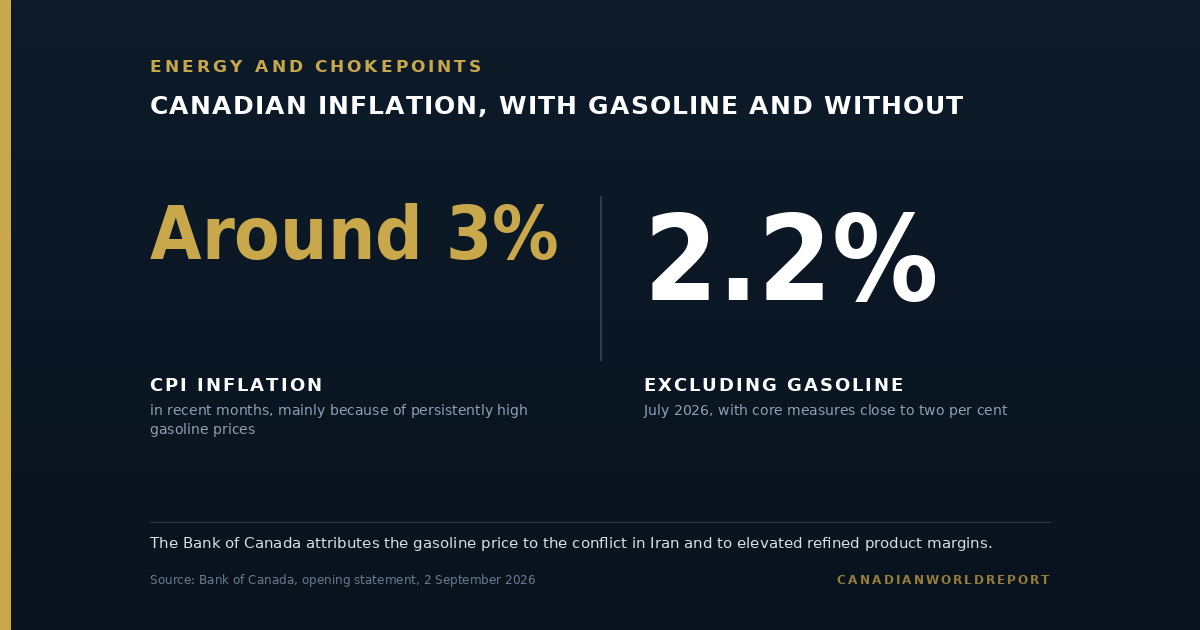
On April 8 the White House announced that Iran had agreed to reopen the Strait of Hormuz. On September 2 the Governor of the Bank of Canada told a press conference that shipments through the strait are still curtailed, that Canadian inflation is sitting at around three per cent with gasoline named as the main reason, and that stripping gasoline out leaves it at 2.2 per cent.
Trade War Escalates to Fever Pitch
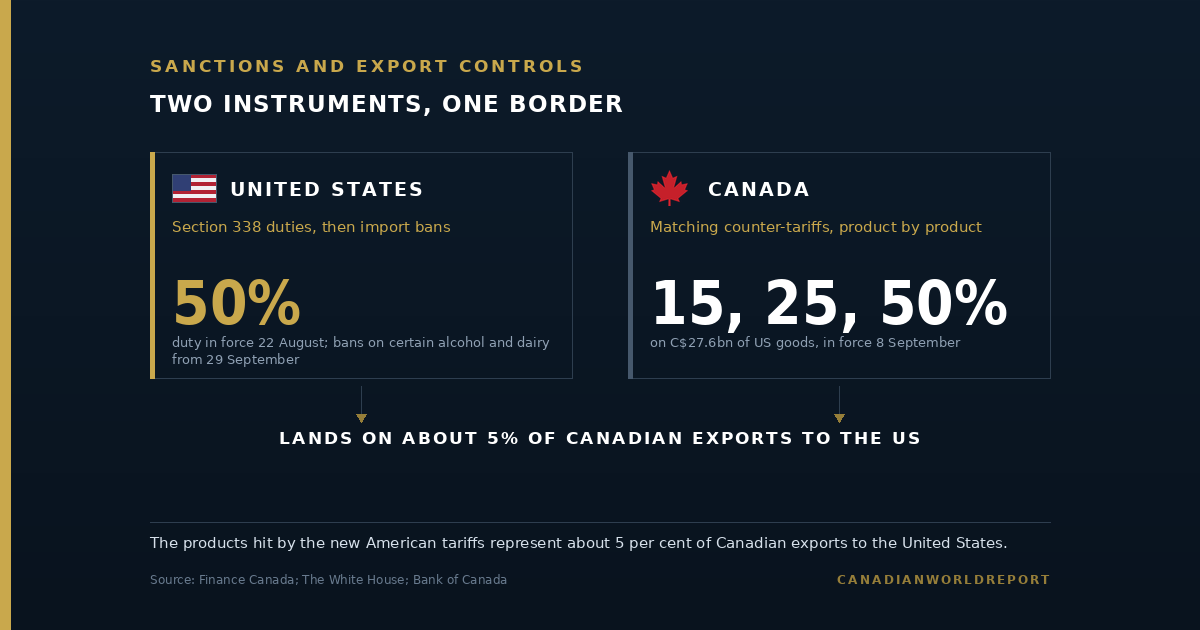
On September 8 Canada’s counter-tariffs took effect on $27.6 billion of American goods, matching Washington’s rates product by product. The same day the President signed five proclamations that go past taxing Canadian goods to barring some of them from entering the United States at all. Those import bans start on September 29.
Beijing Announced It. Ottawa Did Not.
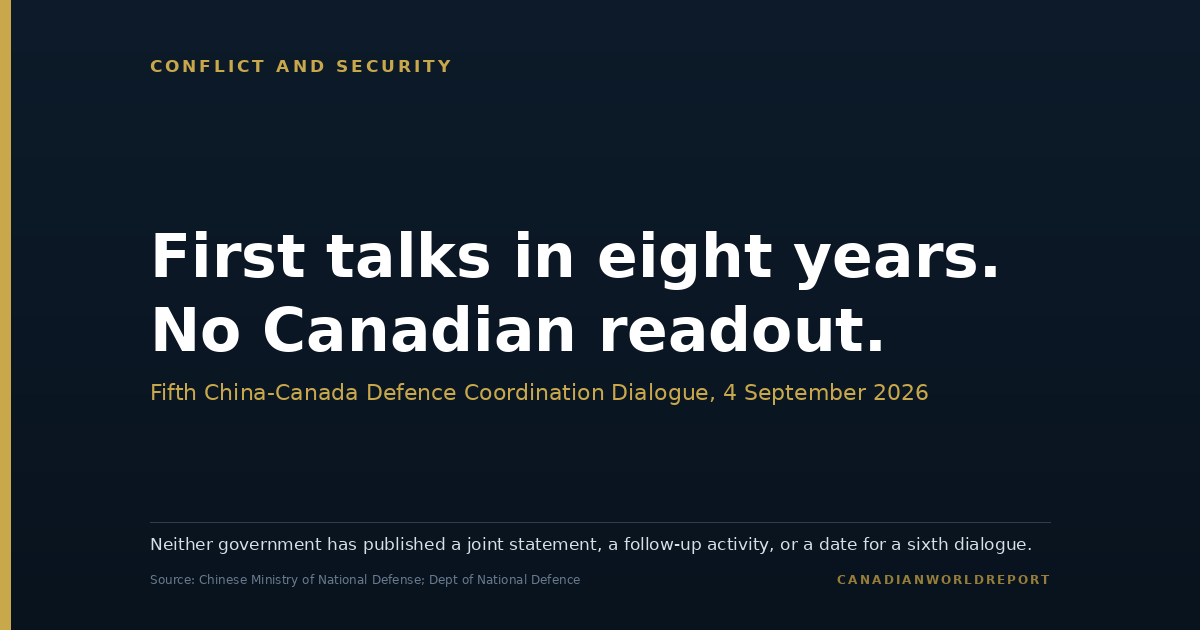
Canada and China held military talks on September 4 for the first time in eight years. China’s defence ministry published an account of it. The Canadian government published nothing, and confirmed it only when reporters asked, on September 8, the day Canada’s counter-tariffs took effect against Washington.
From Coup to Contract: How Washington and Beijing Pursue Resources Abroad
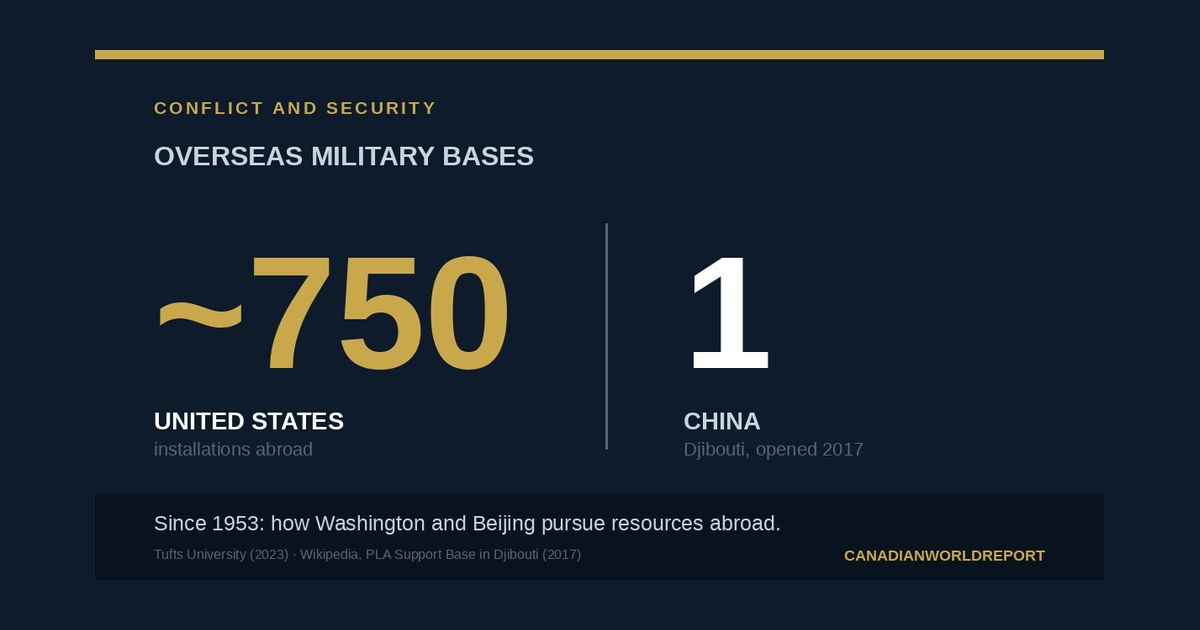
Since the 1953 overthrow of Iran’s prime minister, the United States has repeatedly used covert action and military force to secure resource access abroad, most recently in Venezuela. China has built its own global reach instead through loans and infrastructure, a strategy now cooling as its own ledger comes due.
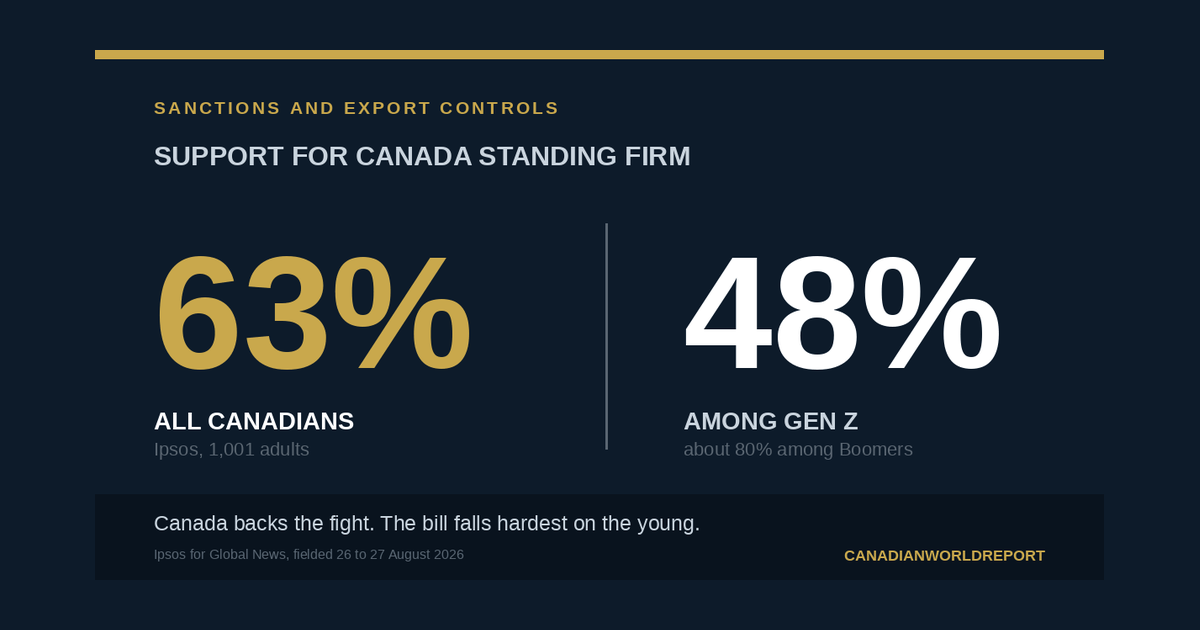
Canada Backs the Fight; the Bill Falls Hardest on the Young
In Youngstown, Ohio, a homebuilder reports three or four planned houses that have not gone ahead this year, and an aluminum fabricator has shelved its expansion into Ontario and Quebec. Across the border, most Canadians back standing firm against U.S. tariffs even if it costs them, but that resolve is not evenly held: it is strongest among older, financially secure Canadians and weakest among the young. Canada’s own counter-tariffs land at one minute past midnight on September 8, the point where that resolve first meets a bill of its own making.
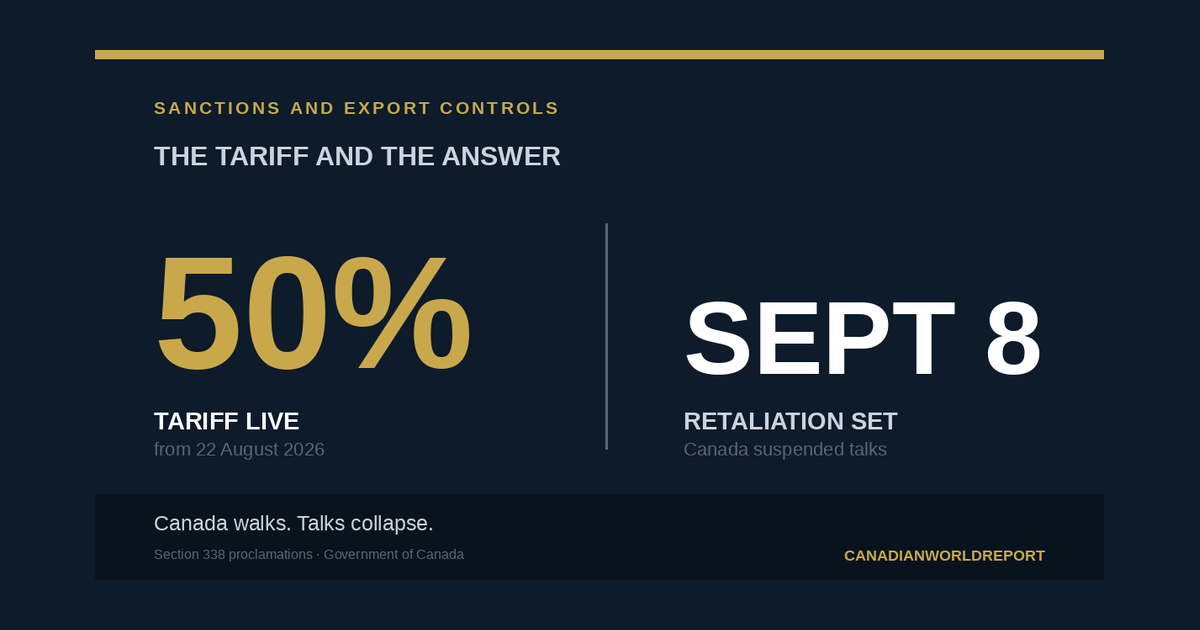
Canada Walks; Talks Collapse
Canada suspended trade talks with the United States late on Friday, August 21, after Prime Minister Mark Carney said Washington’s last-hour demands touched Canadian sovereignty, the French language and the auto sector. A 50 percent U.S. tariff on a defined list of Canadian goods took effect hours later. Carney has set September 8 for dollar-for-dollar retaliation. The product list and rates are not yet published.
How to read this page
How we verify
Every material claim is checked against a wire service or a primary document before it is written. Where the primary source is reachable we use the primary source. Unlabelled claims are not published.
What we refuse to cover
Domestic politics, elections, culture war, personalities. Not because they do not matter, but because covering them would destroy the non-aligned position that makes everything else credible.
Why no links out
Every source address is printed in full at the foot of each piece, in a box that selects on one click. Verifiable and clickable are not the same thing. You can check us without being invited to wander off.